
Healthy Planet Pillar

Our Healthy Planet Pillar is about the relationship between people, place and the natural world. It asks: how can the way we design, use and care for our places help nature thrive, and help us thrive alongside it?
Every place sits within a living system. Around us and beneath our streets and buildings are soils, waterways, microclimates and habitats, all interacting in complex ways to give life to a place. That's why we talk about ecologies, plural. A healthy environment isn't just about "greening" a space. It's about creating places where people can feel, act and live in tune with the natural world.
Climate disruption, declining biodiversity and a growing disconnection from nature are affecting both the health of our planet and the health of the people who live on it. Creating places that restore and work with nature is therefore fundamental to building healthier, more resilient communities. Our work helps communities and partners understand the ecology of their place and translate it into practical strategies that:
• Create everyday opportunities for people to experience and connect with nature
• Support local wildlife to survive and thrive, rather than pushing it out
• Work with natural systems such as water, soil and microclimate, rather than against them
• Empower communities to become active stewards of their local environment

Like every part of placemaking, ecology involves both the hardware and software of place. The hardware is the tangible: the parks, trees, waterways, habitat and living infrastructure. The software is the intangible: the knowledge, care, stewardship and emotional bonds people have with the natural world. Both must be nurtured for places and the planet to be healthy.
Drawing on more than 35 years of Village Well experience, alongside leading research and practice, we have identified four key elements that underpin our Healthy Planet Pillar. Together, they provide the foundations for places that are nature-rich, resilient and regenerative. They are:
Caring for Nature
Caring for nature is about the emotional bond people feel with the natural world around them. It grows when people know their local ecosystem: the trees they sit under, the birds they hear each morning, the creek they walk beside. And when people love a place, they are far more likely to care for it.
Across Australia, we're seeing this love turn into action. Rather than leaving conservation to others, communities are getting involved in rewilding and regenerating the places where they live. In Melbourne, local groups have helped bring neglected creeks back to life and are rewilding public spaces in their own neighbourhoods.
Places that invite people to bond with and care for nature, and that support local groups to take part, help turn residents into stewards. Over time, that shared care becomes part of the identity of a place.
Nature Experiences
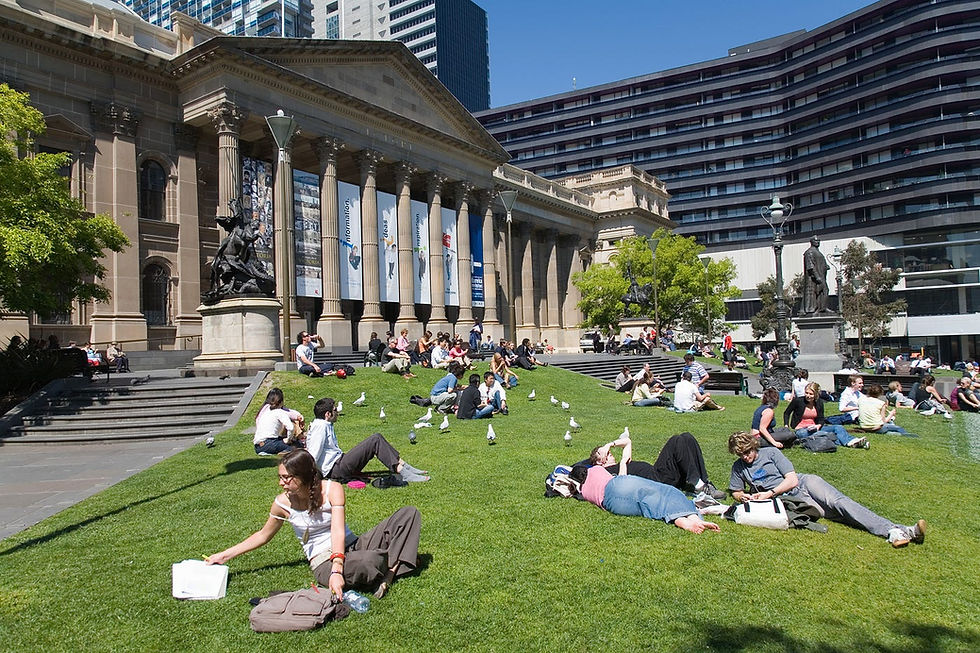
Nature experiences are the everyday moments when people get to spend time in and with nature. When access to nature becomes part of daily life, rather than something saved for holidays, both people and places thrive.
The research is clear: regular doses of nature reduce stress, aid recovery, and can even improve learning and productivity. A walk through the park at lunchtime, a greener schoolyard or a morning surf can all act as a kind of medicine for our physical and mental health.
The richer and more complex a natural space is, the more it gives back. Places with layered planting, varied textures and room to explore invite people to slow down, play, reflect and restore. These immersive experiences are still possible in busy urban areas, and a more diverse, natural-looking space will often do more for our wellbeing than a neat, manicured one.
Biodiversity Inclusivity
Biodiversity inclusivity is about designing places that make room for other species, not just people. Urbanisation has traditionally displaced native plants and animals, making it one of the leading causes of biodiversity loss. But our towns and cities can also be part of the solution.
Around the world, urban rewilding is bringing species back to places they had long disappeared from, proving that neighbourhoods can be designed to protect and even grow biodiversity. Here in Australia, some major urban renewal projects are now setting biodiversity targets as part of their planning from day one.
Big change can start with small steps. Wildlife-friendly lighting, lights-off programs, possum bridges and habitat features built into walls and buildings all help make places safer for local wildlife. The key is choosing interventions that have been tested locally and genuinely work for the species that call a place home.
Natural Systems
Natural systems are the air, water, soil and food cycles that sustain all life. Every place has its own geology, water flows, and microclimate, and healthy places work with these systems rather than against them. When we try to control nature too tightly, we can break the way these systems function and make our places less resilient.
"Living infrastructure" offers another way. By copying how nature works, we can tackle complex urban challenges. Cities around the world are becoming "sponge cities" that absorb and filter stormwater through wetlands, swales and permeable surfaces. Others are bringing buried creeks and rivers back to the surface, with remarkable results for nature, people and flood resilience.
Closer to home, urban food growing and foraging are reconnecting communities with the land, reducing waste and, when done regeneratively, restoring healthy soil. Practices like these don't just make ecological sense; they build resilience, ease the cost of living and bring people together.
How can we help?
Addressing these four components, along with the many other considerations involved in creating a healthy planet, is hard work.
At Village Well, we offer a range of services focussed on helping places and nature thrive together. We:
• Help partners embed nature in their placemaking processes
• Engage communities to build connection to nature and a culture of stewardship
• Bring together ecologists, designers and stakeholders to plan nature-positive places
• Develop strategies that embed ecological thinking in the vision, design and management of places
Get in touch with us if you want to know more.


Comments